Repair the cause. Restore the finish.
Stucco Repair in Northeast Florida
A lasting stucco repair begins by identifying why the surface failed, then opening the repair area far enough to reach sound material. We evaluate the wall, explain the likely repair boundary, and match the replacement texture to the surrounding finish.
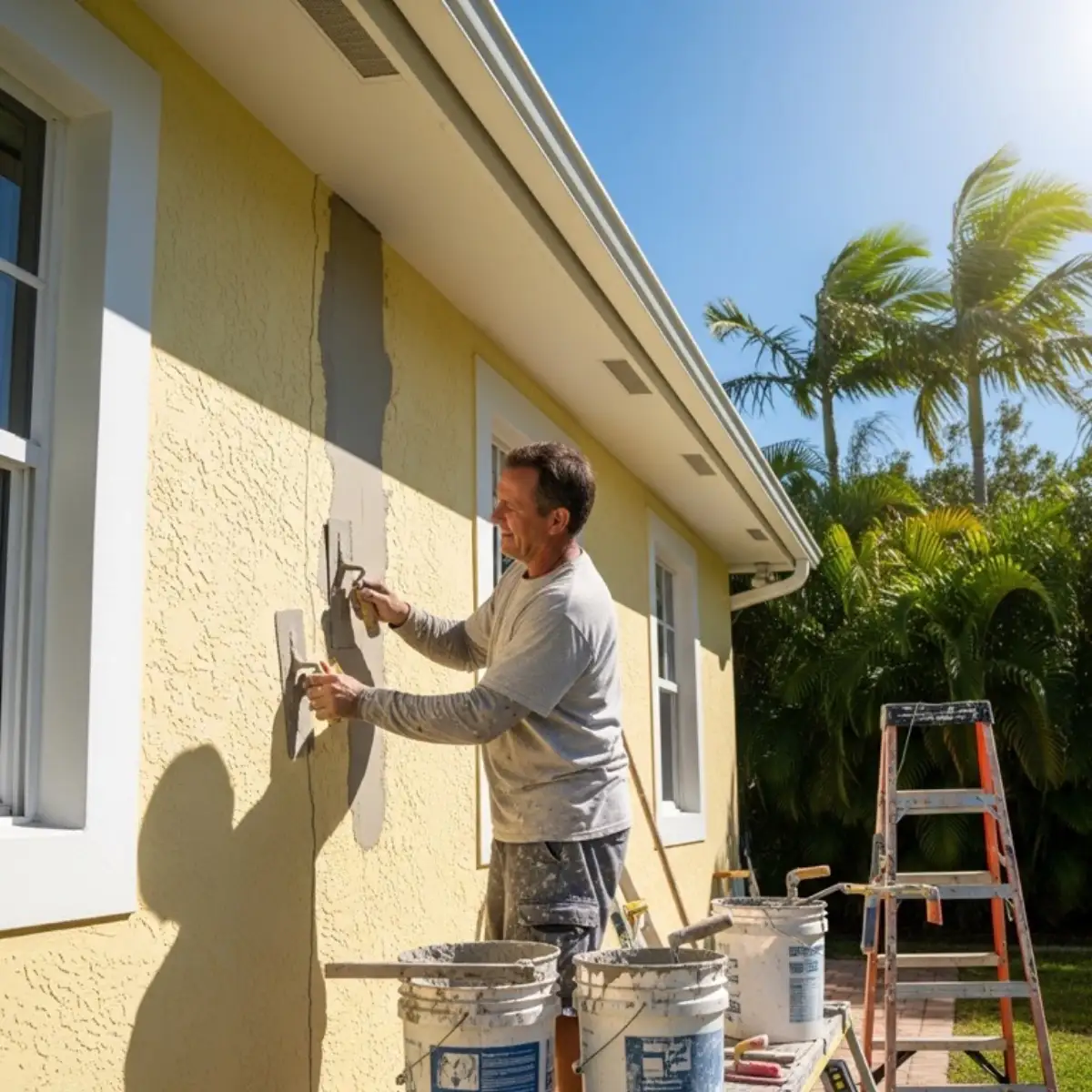
Start with the wall condition
Hairline cracks, recurring openings, stains, hollow areas, impact damage, and failed patches do not call for one standard repair. Their location, direction, moisture exposure, and relationship to windows, doors, roof edges, and wall transitions shape the next step.
Define a durable repair boundary
The repair should extend to stable material and workable transitions. If damaged lath, loose stucco, trapped moisture, or an unsuitable older patch continues beyond the visible mark, we document the condition before expanding the scope.
Match texture after the substrate is sound
Texture and color work come after the underlying repair. We compare the surrounding pattern, depth, age, and coating history so the finished area belongs on the wall instead of reading like a flat surface patch.
Know when restoration is the better path
Localized repair is appropriate when the surrounding finish remains sound. Repeated failures across an elevation, widespread delamination, or many incompatible patches can make a broader restoration more practical and visually consistent.
What to document before the inspection
Photograph the entire wall as well as the damaged area, then note when the condition first appeared and whether it changes after rain, heat, or seasonal weather. Include windows, roof edges, penetrations, downspouts, paving, and landscaping near the symptom. Previous invoices, paint records, leak repairs, and photographs can help establish whether a crack is new, recurring, or connected to earlier work. This background does not replace an on-site evaluation, but it helps separate a recent impact from a condition that has developed over time and gives the first conversation a more useful starting point.
How moisture changes the repair plan
Staining and bubbling can indicate water movement, but the visible mark is not always the entry point. Water may travel from flashing, windows, sealant joints, roof transitions, penetrations, or drainage conditions before appearing through the finish. Repairing only the stained stucco can hide the symptom while the source remains active. When moisture is suspected, the sequence should address the responsible building component first, allow wet materials to be evaluated, and then restore the stucco assembly. Roofing, window, plumbing, or structural specialists may be needed when the source falls outside the stucco scope.
Materials must fit the existing assembly
Traditional stucco, EIFS, painted finishes, cementitious coatings, and earlier patch materials behave differently. A compatible repair considers thickness, substrate, reinforcement, bond, vapor movement, curing, and the finish already on the wall. Product selection should follow the conditions found rather than a universal patch recipe. During an estimate, ask what material is being repaired, how loose edges will be prepared, whether lath or substrate work is included, and how the replacement area will transition into the existing finish. Clear answers reduce the risk of a patch that cracks, debonds, or traps moisture.
What a written repair scope should include
A useful scope identifies the wall or elevation, the known repair area, protection of adjacent surfaces, removal limits, substrate assumptions, repair materials, texture work, coating or finish, curing, cleanup, and exclusions. It should also explain how concealed conditions will be documented if opening the wall reveals damage beyond the visible boundary. Homeowners should understand which discoveries are included, which require a change decision, and who is responsible for connected work such as flashing, windows, roofing, or painting. This makes proposals easier to compare and keeps field decisions tied to the actual condition.
Repair sequencing and site protection
The usual sequence moves from source correction and protection to controlled removal, substrate preparation, repair, curing, texture, and finish. Exact timing depends on material, weather, wall exposure, and the depth of work. Windows, doors, fixtures, plants, patios, and walking paths may need protection while dust and wet material are managed. Access should remain clear for ladders and equipment, and occupants should know which openings or outdoor areas will be temporarily unavailable. Rushing finish work before the repair has cured can compromise appearance and performance, so realistic scheduling is part of a durable result.
Set realistic expectations for the finished wall
A well-executed repair should be sound, weather-appropriate, and visually compatible, but an absolutely invisible patch is not always possible on an aged or repeatedly coated elevation. Texture throws shadows, old paint fades unevenly, and previous repairs can create several different reference surfaces. The estimate should explain whether the finish will remain localized, blend across a wider area, or continue to an architectural break. Choosing that finish boundary before work begins is more reliable than deciding after a new patch has already been placed beside a weathered wall.
After the repair is complete
Keep photographs, the written scope, product information, and finish details with the property records. Watch the repaired area and nearby joints after heavy rain and through normal seasonal movement. A new stain, recurring crack, soft area, or change at a window or penetration should be documented rather than covered with caulk or paint before it can be evaluated. Routine observation is especially useful when the original condition involved water or movement. Maintenance may include sealant, coating, drainage, or connected building components, depending on what the completed repair and inspection identified.
Service area and estimate preparation
Stucco Home Repair evaluates residential and commercial stucco concerns across St. Augustine and Northeast Florida. Service availability depends on the property location, requested scope, access, and current schedule. When requesting an evaluation, provide the address, best contact information, affected elevation, approximate height, photographs, and any known leak or repair history. Mention gates, occupied units, restricted hours, or difficult access before scheduling. That information helps determine whether photographs are enough for an initial review or whether an on-site inspection is the appropriate next step.
Questions to ask when comparing repair proposals
Compare proposals by the condition they address, not only by the visible square footage. Ask how the contractor will determine removal limits, what happens if loose material continues beyond the estimate, which substrate or lath repairs are included, and how water-related findings will be handled. Confirm the planned texture and finish boundary, curing assumptions, protection, cleanup, warranty terms, and exclusions. A lower number can represent a smaller or less complete scope rather than the same work at a better price. Written assumptions help homeowners understand whether each proposal repairs the underlying assembly, covers only a surface symptom, or depends on separate work by another trade. The contractor should also be able to explain which observations support the recommendation and which conditions cannot be confirmed until the area is opened. That distinction keeps reasonable uncertainty visible without turning every concealed condition into a surprise. Confirm who will communicate findings, provide photographs, price changed conditions, and obtain approval before additional work proceeds.
Licensed Northeast Florida contractor
Get a clear repair recommendation
Share the property location, affected wall, when the condition appeared, and whether it changes after rain. Wide and close photographs help us prepare for the first conversation.
Contact Stucco Home Repair