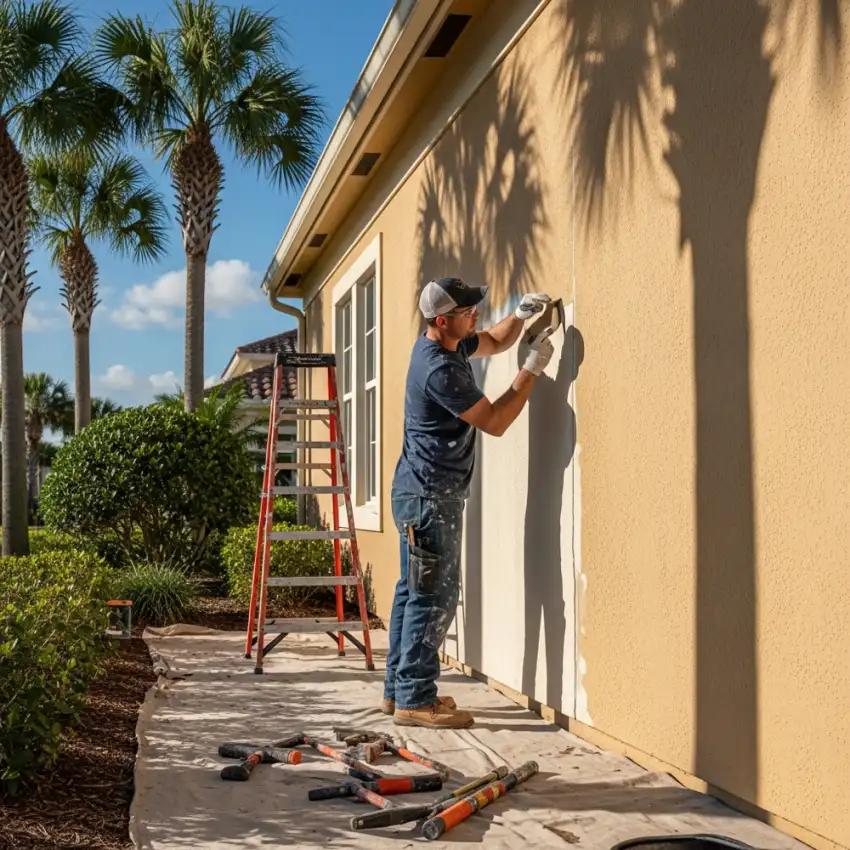
Fog Coating & Sealing

Fog Coating & Sealing

Protective coating that restores color and seals minor imperfections.

About This Service

Fog coating is a cost-effective way to refresh faded stucco and seal hairline cracks. This thin cementitious coating fills minor surface imperfections, restores uniform color, and adds a layer of protection-all without the expense of full recoating.

What's Included

  • Hairline crack sealing
  • Color restoration
  • Surface protection
  • Mold and mildew resistance
  • UV protection
  • Breathable finish

Our Process

01

Evaluation

Assess if fog coating is appropriate for your stucco condition.

02

Cleaning

Power wash to remove dirt, mold, and loose material.

03

Repair

Address any larger cracks that need structural repair first.

04

Application

Spray fog coat evenly across stucco surfaces.

05

Curing

Allow proper cure time for maximum durability.

Benefits

  • Cost-effective refresh
  • Seals minor cracks
  • Extends stucco life
  • Quick application
  • Immediate results

Frequently Asked Questions

What's the difference between fog coat and paint?

Fog coat is a thin cement-based coating that bonds with stucco, while paint sits on top. Fog coat is breathable and won't peel, making it ideal for Florida's humid climate.

Will fog coating fill my stucco cracks?

Fog coating fills hairline cracks (under 1/16"). Larger cracks should be repaired first for best results.

How often should fog coating be reapplied?

Quality fog coating lasts 7-10 years depending on exposure. Shaded areas last longer than sun-exposed walls.

Service fit

When fog coating is the right stucco repair choice

Fog coating works best when the stucco is bonded, dry, and mostly sound, but the color has faded or hairline surface cracking needs a breathable cementitious refresh. Stucco Home Repair inspects the wall first because fog coat should not be used to hide active water intrusion, loose stucco, or cracks that need proper repair. If the wall is not ready, we explain the prep work before coating is considered.

For St. Augustine, Jacksonville, Ponte Vedra, Palm Coast, and nearby Northeast Florida homes, the value is in the sequence. Cracks are addressed, damaged areas are patched, texture is blended, and the wall is allowed to cure before the finish is refreshed. That helps the new surface look more even while preserving the breathability stucco needs in a humid coastal climate.

Homeowners often ask about fog coating before repainting because they want a cleaner look without trapping moisture behind a film. A free inspection gives you a written scope that explains whether fog coating, spot repair, color matching, or fuller restoration is the better fit for the condition of your exterior.

Fog coating

Fog coating with a written repair scope

Fog coating is most useful when a homeowner sees faded but sound stucco, uneven weathering, repaired minor cracks, and exterior color that needs a masonry-style refresh. Those signs can be cosmetic, but they can also point to moisture movement, failed material, or previous work that did not bond correctly. Stucco Home Repair starts with a free inspection so the repair is based on the condition of the wall instead of a guess from a photo.

The inspection looks at the damaged area and the details around it: windows, doors, trim, roof returns, lower wall edges, penetrations, sealant, and existing patch lines. In Northeast Florida, rain, humidity, salt air, irrigation, and strong sun can all change how stucco fails. A small crack or stained patch should be checked before new material is placed over a problem that is still active.

For fog coating, the field work can include repairing active cracks first, checking old coatings and surface absorption, cleaning the wall, then applying a compatible color-restoration coat. The crew explains what needs to be opened, what can stay in place, where the finish will be blended, and whether related issues such as sealant, moisture, or older patches should be corrected at the same time. That keeps the project focused while still protecting the wall.

Texture and color matching are part of the decision. A repair can be technically sound and still look unfinished if the surface profile, sand size, finish pattern, or aged color is ignored. Stucco Home Repair studies the surrounding stucco and recommends a repair boundary that gives the finished area the best chance of blending with the existing exterior.

This service is a good fit for homes that need color renewed without hiding active stucco damage. If the surrounding wall is solid and dry, a targeted repair may be enough. If the inspection finds hollow areas, trapped moisture, widespread finish wear, or several older patches, the better recommendation may be a broader repair, fog coat, color change, or full refinishing plan. The homeowner gets that explanation before work begins.

A written scope is useful whether you are maintaining your home, preparing to sell, buying a property, or responding to an inspection report. It documents the repair area, the recommended method, appearance expectations, and written warranty details. That gives you a clearer record than a quick verbal estimate and helps prevent small stucco problems from becoming repeat repairs.

Stucco Home Repair serves St. Augustine, Jacksonville, Ponte Vedra, Nocatee, Palm Coast, Flagler, and nearby Northeast Florida communities. Call (904) 526-2075 to request a free inspection and find out whether fog coating is the right path for your exterior.

Best fit

homes that need color renewed without hiding active stucco damage.

Repair focus

repairing active cracks first, checking old coatings and surface absorption, cleaning the wall, then applying a compatible color-restoration coat.

Homeowner result

A clear inspection, written scope, texture and color guidance, and warranty details before the stucco work begins.

Additional guidance

Fog coating follow-up

Fog coating works best after active defects are repaired. Homeowners should expect cracks, old patches, stains, and coating age to be reviewed before a color-restoration coat is recommended. If the wall is sound, fog coating can refresh a faded exterior while keeping a stucco character that feels less heavy than a paint-like cover. If the inspection finds moisture or loose material, that repair should come first so the coating is not asked to hide a problem it cannot solve.

Fog coating works best after active defects are repaired. Property owners should expect cracks, old patches, stains, and coating age to be reviewed before a color-restoration coat is recommended. If the wall is sound, fog coating can refresh a faded exterior while keeping a stucco character that feels less heavy than a paint-like cover. If the inspection finds moisture or loose material, that repair should come first so the coating is not asked to hide a problem it cannot solve.

Fog coating works best after active defects are repaired. Homeowners should expect cracks, old patches, stains, and coating age to be reviewed before a color-restoration coat is recommended. If the wall is sound, fog coating can refresh a faded exterior while keeping a stucco character that feels less heavy than a paint-like cover. If the inspection finds moisture or loose material, that repair should come first so the coating is not asked to hide a problem it cannot solve.

Useful next step

Request a free inspection so the scope matches the wall condition rather than a surface guess.

Appearance planning

Texture, color, and transition lines are discussed before the finish work begins.

Protection first

Active cracks, moisture, and loose material should be corrected before cosmetic finish work.

Call NowFree Estimate